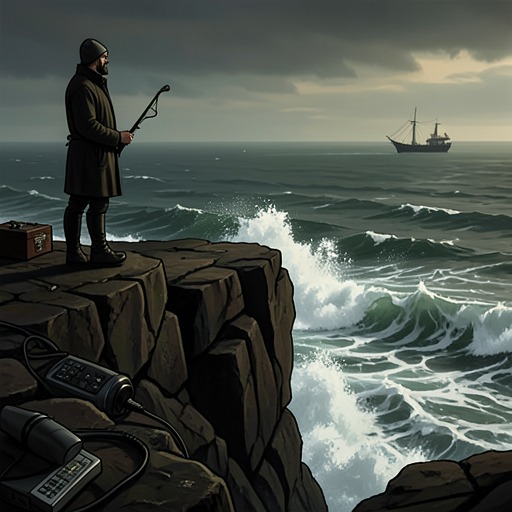
My brother the ocean
Promise at DawnMy brother the ocean names the narrator’s intimate bond with the sea: a source of understanding at Big Sur when human companionship cannot meet the emotional need shaped by his mother’s early love. The image makes the ocean both refuge and witness, offering kinship without resolving the narrator’s loneliness or his continuing sense of conflict.
Identity and Image
The expression turns the ocean from landscape into family. In the narrator’s account, it is not merely a setting beside which he suffers; it is the one companion able to understand his heart. This kinship is especially significant because the ocean is vast and impersonal, yet the narrator finds in it a responsiveness that he cannot recover from human relationships.
Big Sur and Continuing Conflict
At Big Sur, the narrator lies on the shore after the battle is over. Seals call nearby, and a whale passes across the immense water, but the scene does not signify a settled victory: he still sees the enemy legions watching for any sign of submission or defeat. Against that continuing inner conflict, the ocean becomes a companion and witness. Its presence offers solace without pretending that the struggle has ended.
Maternal Love and Emotional Longing
The image is connected to the narrator’s retrospective account of his mother’s love. He understands that being loved so completely in childhood left him expecting a fullness that later relationships could not reproduce. At Big Sur, the ocean is the only brother who can understand the resulting hunger. The expression therefore holds comfort and loss together: the sea offers a form of kinship, while the narrator’s attachment to it also registers the absence of the love from which his longing began.